Showing posts with label Research. Show all posts
Showing posts with label Research. Show all posts
Friday, 12 December 2014

Saturday, 22 November 2014
Settings/ locations commonly used within pyscho-thrillers
The setting is a very important element to Psychological thrillers. The two most common location for Psychological thrillers to be set in; is the city and inside a building. E.g. An house jail restaurant. The countryside isn’t as commonly used as it can get confused with a horror film.
Psychological thriller: the setting would be in the hospital, church, house, prison etc...
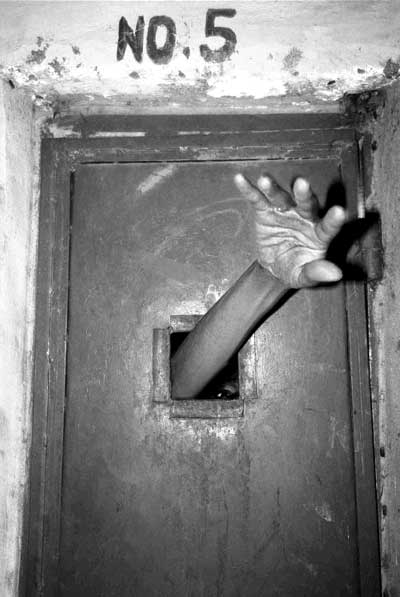
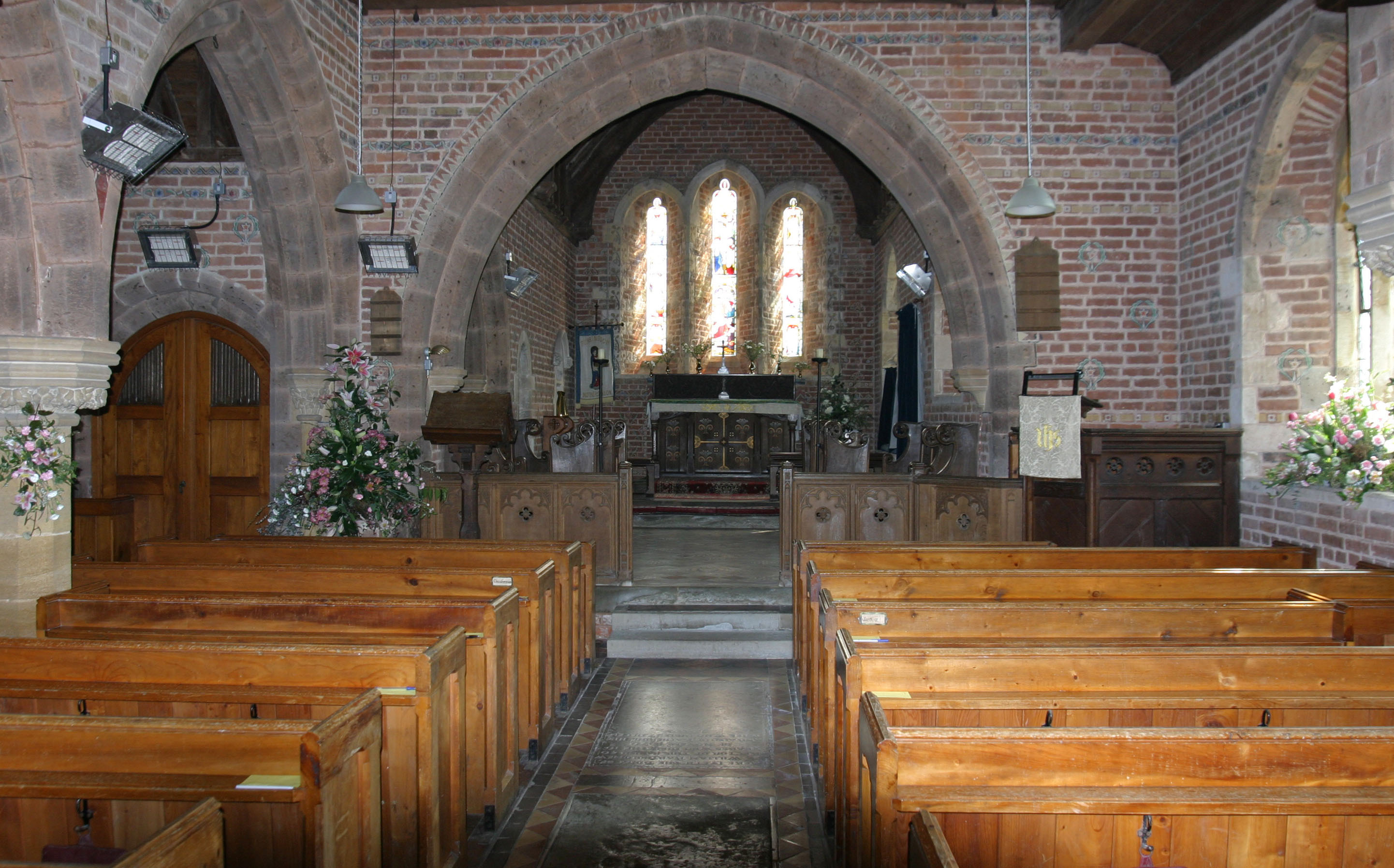

Psychological thriller: the setting would be in the hospital, church, house, prison etc...
Possible sound effects
From these clips, I have learnt that the stereotypical sounds for a psycho-thriller tend to be dark and eerie. You may experience sound effects such as screaming, wind whistling, creaky doors and high-pitch drum sounds.
Having looked at these, I would like to incorporate the intensity of volume into our film opening, as it will give tension and suspense to the audience.
Possible ideas for our main character
Having watched this, I know that psycho-thriller characters tend to be personally involved and critically dominant throughout the film. Also, they tend to suffer from a mental illness of some type, which affects their behaviour within the film. These characters are quite often shown to be mistreated by others and seen as abnormal, which tends to be the starting point/ spark for their road of destruction that normally follows!
Psychological thrillers and analysis
Through watching this montage of various psycho-thrillers, I can now tell that most films in this genre consist of dark lighting, eerie music, screaming, glitch editing/ effects and most importantly to emphasis a psychological aspect there is murmuring/ unusual behaviour amongst the characters.
Tuesday, 11 November 2014
Shots from cinema listings
Top films on in cinemas right now


The top 12 that are listed are:
1) Interstellar ~ Drama genre directed by Christopher NolanSpace epic 'Interstellar' takes place on a troubled Earth, where dwindling food supplies are forcing humankind to consider the possibilities available to them beyond Earth's boundaries.
2) The Hunger Games Mockingjay part 1~ Action genre directed by Francis Lawrence.
Things are heating up in 'The Hunger Games: Mockingjay - Part 1' as Katniss Everdeen gets swept up in the revolution against the Capitol.
3) The Limitation Game~ Drama genre directed by Morten Tyldum
Biographical drama 'The Imitation Game' centres on the English mathematician and cryptographer who helped crack the Nazi's Enigma code during World War II.
4) Nativity~ Comedy genre directed by Debbie Lsitt
This Christmas the pupils of St Bernadette's and their much-loved, madcap teacher Mr Poppy (Marc Wootton) are back for their biggest adventure yet involving fantastic flashmobs, excitable elves, Christmas carols and of course Archie the donkey!
5) The Hobbit The battle of the Five Armies~ Action, Adventure, fantasy directed by Peter Jackson
The conclusion of the trilogy, 'The Hobbit: The Battle of the Five Armies' sees Thorin and Bilbo reclaiming the dwarves' homeland - but also accidentally unleashing Smaug upon Lake-town.
6) Mr Turner~ Drama genre directed by Mike Leigh
'Mr. Turner' examines the last 25 years of the great if eccentric landscape painter J.M.W. Turner (Timothy Spall), one of the most important figures in British art history.
7) Gone Girl~ Drama, Thriller directed by David Fincher.
Suspenseful mystery 'Gone Girl' follows the investigation into the disappearance of missing Amy Dunne as dark truths about her seemingly perfect life emerge.
8) The Drop~ Drama directed by Michael R Roskam
Set in the seedy criminal underworld of Brooklyn, 'The Drop' centres on Bob, a barman whose pub doubles as a 'drop point' for local gangsters exchanging money.
9) Fury~ Drama directed by David Ayer
Set during the dying days of the Second World War, 'Fury' follows a team of Allied soldiers who venture behind enemy lines into the heart of Nazi territory on a final charge
10) Teenage Mutant Ninja Turtles~ Action, Adventure, Animated, Comedy directed by Jonathan Liebesman
Everyone's favourite gang of reptilian martial arts masters are back fighting crime on the streets of New York in 'Teenage Mutant Ninja Turtles'.
11) Night Crawler~ Thriller genre directed by Dan Gilroy
Jake Gyllenhaal stars in 'Nightcrawler', playing a driven young man who finds a home in the nocturnal world of freelance crime journalism in Los Angeles.
12) Ouija~ Horror, Thriller directed by Stiles White
In 'Ouija', a group of teenagers try to use a spirit board to contact their friend, who died in a car accident. They are forced to confront their worst fears after they accidentally awaken its dark powers.
Audience:
Out of the 12 top films the majority of them are drama genre that the audience has appealed to. Each film varies in their plot with none of them having similarities to the other. The thriller genre that we are looking at takes form in the film "Gone Girl", the poster for the film features a long shot of a man standing alone. This makes the audience think about why he is alone, the title 'gone' applies someone has disappeared or has gone missing and 'girl' is a mystery of how the man and the 'girl' are related. The man in the audiences eyes could be a brother, friend, murderer to the 'girl' and makes the viewer want to know what is going to happen in the story. One main convention within the thriller genre is to create a sense of mystery and suspense without trying to give to much away, for example the character in the poster is not shown as he is facing the opposite direction. The poster is dark and looks like it is nearly night time, making the audience wonder why the character is standing in what appears to look like a field, could he be searching for something or hiding something? The film is directed by David Fincher, who is famous for his thriller genres and conventions, this means that the viewer is expecting a certain style of film and expects it to be mysterious and psychological at times.From looking up what is the top cinema listings we can interpret what types of films appeal most to audiences and such as "Gone girl" we can get ideas on posters and background/fonts for our own film Doctor 6:19.
Rhianna Henson-Smith
Monday, 10 November 2014
Existing film production company
DreamWorks Animation Glandale, California

20th century fox Century City, California

Blue Sky Studios Greenwich, Connetticat

Those company are mostly dedicated to animated films.
For the thriller genere there are some:

New Line Cinema, New York, USA
Nova Scotia, Canada
Saturday, 8 November 2014
History of the Psycho-Thriller genre
History of the Psycho-Thriller genre
1920’s
The psycho-thriller genre came on the scene. In 1926-1927 came the development of ‘talkies’ following experimental techniques begun in the late 1910’s.In the 1920’s the technology used was very limited, so the movies produced weren’t very clear or realistic as they are today.The lodger’ was a British psychological thriller made in 1926 by Alfred Hitchcock, who is now famous for his use of thriller conventions. The lodger was a black and white silent movie, and the rating is a 12. This can show that it may not be as scary or thrilling, and due to the lack of technology the movie will not be as believable.
1930’s

‘The Most Dangerous Game’ was produced in 1932 by Irving Pichel and Ernest B. Schoedsack , which is a 78 minute movie. Keywords for this movie are “madman, escape, psychopath, slaughter” these are typical conventions of a psychological thriller, however the certificate rating of 12 show that only frequent violent scenes are used, therefore we are unable to see the emphasise on murders or horror scenes.
1940’s
"Rebecca" was a famous film made in 1940 by Alfred Hitchcock, it is a black and white movie which doesn’t appeal to a younger generation, due a lack of technology. The music however flows with the genre because it creates the tension and suspense needed to make it fit with the style of film.1950's
During the 1950 was WWII, what was witness from the war was reflected in their movies. ‘The man who cheated him-self’ was a movie made in 1950 by Felix E. Feist, The reviews for this movie say that the cinematography was good along with the editing, soundtrack and cutting, but there were a few missing frames. This proves that the technology is improving.1960's
‘The sinister urge’ is a 1961 psychological thriller directed by Edward D. Wood Jr. there is no certificate rating for this movie, however the caption for the poster to this movie is “compulsive killer strikes terror” and “a psycho with the urge to kill”. This draws in the audience because it is showing advertisements in different ways.1970's
‘Sleuth’ was made in 1972 by Joseph L.Mankiewicz, it is a colour movie. This movie is about a sleuth as told in the title, the title however doesn’t really link with the genre, which could potentially mislead the audience in what they are watching or going to watch. The keywords for movie are typically conventions you want/expect to see in a psychological thriller.
1980's
‘Brimstone and Treacle’ was released in 1982 but Richard Loncraine. It has a certificate rating of 18 this means that extreme violence is allowed to be shown, including blood and gore, also bad language, and even sexual scenes such as rape, which is actually part of the movie. The DVD cover looks very gothic and thrilling as there is a lady screaming and a man praying on a black background.1990's
‘Silence of the Lambs’ 1991 by Jonathan Demme. This movie includes a psycho villain and a Hannibal, and a certificate rating of an 18. The perspective of the movie is very good as it incorporate a lot of aspects needed that may not have been used in earlier films. For example it shows ripped of human skin being eaten.Present Day
In present day psychological thrillers, the use of different types of technology and CGI. Recently I have realised that the technology doesn’t make the film scary it can be done by the camera shots, angles and how they cut the scenes. This is shown very well in “Black Swan”. The very fast cuts in this movie make the scene feel fast and scary.Over Time
Over time many things have changed in a psychological thriller, the most is the technology, which is key to making the film as realistic as possible. Another thing is the certificate rating, over time the certificate ratings have gone up. This is probably because psychological thrillers have gotten al little bit more frightening but mostly they have gotten more gorier and sadistic.By Rhianna Henson-Smith
Friday, 7 November 2014
Audience for the thriller genre
Psycho thrillers - this generally involves a psychologically disturbed character and gets the audience into their head to show how messed up the film is due to this particular character. Silence of the lambs is a great example as the film messes with the audiences head giving you an insight to how hannibal thinks, linking to our doctor and his mind state within ours.
A thriller genre: Consists of keeping the audience tense and suspenseful. It also uses excitement to link in with the suspense and tention as another main feature within thriller films. The most common sub-genre of thrillers are psycho thrillers, these particular thrillers consist of a psychologically diturbered murderer and a good hearted main character fighting against this mental foe.
Main goal: To keep the audience anticipating in order to be able to play with there minds and constantly suprise them when they are least expecting it. The anxiety created by this keep the audience glued to their seat constantly trying to guess the plot.
 The target audience: Of thriller based films as well as depending on the sub-genre are normally thrill seekers that wish to constantly think ahead of the story. People that like to follow the plot and try to guess what will happen are a perfect audience for thrillers as it gives the director new ideas. When this kind of audience are constantly predicting the outcome of the plot it allows the director to go completely against any ideas the audience may have and suprise them in ways they would not have thought of.
- For example - In leon the deaths of characters throws the audience into another direction. Generally children and main characters are not killed off, however a small child is killed in the first half of the film and the main character is killed off at the end. This type of thriller strays away from stereotypical plots also leading the audience away whilst watching.
This therefore rules out the younger generation as a potential target audience as they would need to be able to keep up and understand the plot of the film as well as the twist and turns that feature within the genre.
Online research: From doing online research I found that the typical age range that thriller films are popular with is 55+ years. I have already evaluated certificate ratings for our film and have decided that it was a 18 rating, this therefore allows only people over 18 to watch our film. As our film features a doctor and is quite a modern and clever spin, I believe our audience would mostly be males aged 25+.
Rhianna Henson-Smith
A thriller genre: Consists of keeping the audience tense and suspenseful. It also uses excitement to link in with the suspense and tention as another main feature within thriller films. The most common sub-genre of thrillers are psycho thrillers, these particular thrillers consist of a psychologically diturbered murderer and a good hearted main character fighting against this mental foe.
Main goal: To keep the audience anticipating in order to be able to play with there minds and constantly suprise them when they are least expecting it. The anxiety created by this keep the audience glued to their seat constantly trying to guess the plot.
The target audience: Of thriller based films as well as depending on the sub-genre are normally thrill seekers that wish to constantly think ahead of the story. People that like to follow the plot and try to guess what will happen are a perfect audience for thrillers as it gives the director new ideas. When this kind of audience are constantly predicting the outcome of the plot it allows the director to go completely against any ideas the audience may have and suprise them in ways they would not have thought of. - For example - In leon the deaths of characters throws the audience into another direction. Generally children and main characters are not killed off, however a small child is killed in the first half of the film and the main character is killed off at the end. This type of thriller strays away from stereotypical plots also leading the audience away whilst watching.
This therefore rules out the younger generation as a potential target audience as they would need to be able to keep up and understand the plot of the film as well as the twist and turns that feature within the genre.
Online research: From doing online research I found that the typical age range that thriller films are popular with is 55+ years. I have already evaluated certificate ratings for our film and have decided that it was a 18 rating, this therefore allows only people over 18 to watch our film. As our film features a doctor and is quite a modern and clever spin, I believe our audience would mostly be males aged 25+.
Rhianna Henson-Smith
Sounds associated with the thriller genre
These sound effects are commonly seen within the thriller genre. This is because sounds such as a cat screaming is sudden and creates a faster pace to the film, it also allows the audience to get a little scared at what the cat is screaming about and creates tension. All of the sound effects are used to create a sudden sense of mystery or suspense, which are conventions associated with the type of genre. A sound of a gun for example has certain themes which they are associated with, such as murder, death and crime. In hearing a gun shot the audience already knows what has happened or what is about to occur.
Rhianna Henson-Smith
History of psycho-thriller genre
https://www.timetoast.com/timelines/history-of-psycho-thriller-genre
Certificate Ratings
What does the 15 symbol mean?
No-one under 15 is allowed to see a 15 film at the cinema or buy/rent a 15 rated video. 15 rated works are not suitable for children under 15 years of age.Are there any limits on what sort of theme a work can have at 15?
No theme is prohibited, provided the treatment is appropriate for 15 year olds.What might I see in a 15 rated film or video?
Any of the following:- strong violence
- frequent strong language (e.g. 'f***').
- portrayals of sexual activity
- strong verbal references to sex
- sexual nudity
- brief scenes of sexual violence or verbal references to sexual violence
- discriminatory language or behaviour
- drug taking
How much strong language is allowed in a 15?
There could potentially be a great deal. At 15 there is no upper limit on the number of uses of strong language (e.g. ‘f***’).Occasionally there may be uses of the strongest terms (e.g. 'c***'), depending on the manner in which they are used, who is using the language, its frequency and any special contextual justification. However, continued or aggressive use will not normally be passed 15.
What about discriminatory or offensive terms?
There may be racist, homophobic or other discriminatory language, and the work could explore themes relating to this.However, at 15 the work as a whole must not endorse discriminatory language or behaviour.
How much sex and nudity is allowed at 15?
At 15 sexual activity can be portrayed, but usually without strong detail. Some sex scenes can be quite long at this category.Though nudity may be allowed in a sexual context there will usually be no strong detail. There are no constraints on nudity in a non-sexual or educational context.
There can be strong references to sex and sexual behaviour, but especially strong or crude references are unlikely to be acceptable unless justified by context.
Sex and sex references are treated the same irrespective of sexuality
Can there be strong violence?
Yes, at 15 violence may be strong. It should not dwell on the infliction of pain or injury, however, and the strongest gory images are unlikely to be acceptable.Strong sadistic violence is also unlikely to be acceptable.
What about sexual violence?
There may be detailed verbal references to sexual violence (for example descriptions of rape or sexual assault in a courtroom scene or in victim testimony) but any portrayal depiction of sexual violence must be discreet and justified by context.What about horror works?
At 15 there can be strong threat and horror as long as there is no sustained focus on sadistic or sexualised threat.Can you see drugs in a 15 rated film or video?
At 15 drug taking may be shown but the work as a whole must not promote or encourage drug misuse (for example, through instructional detail).The misuse of easily accessible and highly dangerous substances like aerosols or solvents is unlikely to be acceptable at 15.
What about dangerous behaviour or things teens might copy?
We consider the risk of potential harm to impressionable teenagers. For example, dangerous behaviour such as hanging, suicide and self-harming should not dwell on detail which could be copied.Whether the depiction of easily accessible weapons is acceptable will depend on factors such as realism, context and setting.
How can I find out more about a specific 15 film?
Please check the BBFCinsight for the film or video you are thinking of watching. You may find BBFCinsight on this website or on our free App as well as on film posters, DVD and Blu-ray packaging, and on some listings. You will also find it attached to some film and video content which is available to download. It provides comprehensive information on exactly why a film or video has been given a particular category. All the issues are discussed in detail and parents in particular can use this information to make informed decisions when choosing viewing material for their children.
Subscribe to:
Posts (Atom)